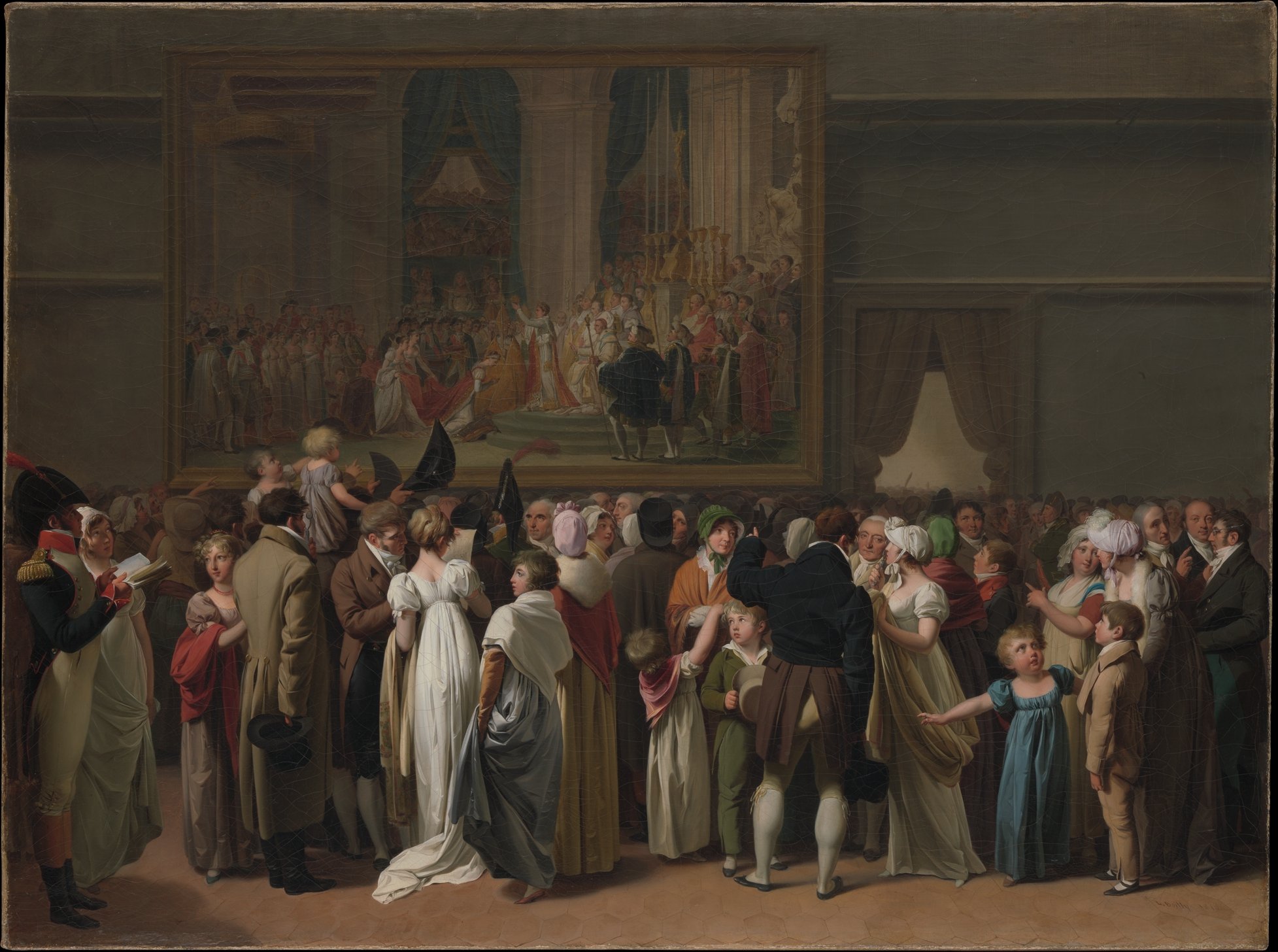
Most people walk into the Louvre with a list. Mona Lisa. Venus de Milo. Winged Victory. Liberty Leading the People. They march from hit to hit, take the photo, march to the next. Three hours later they leave exhausted, vaguely disappointed, unsure what they actually saw. The problem is the list.
The list treats the Louvre like a greatest-hits album. It isn’t. It is a medieval fortress that became a royal palace that became an imperial warehouse that became a museum, and all four of those buildings are still stacked inside the one you are standing in. When people ask what to see at the Louvre, the honest answer is that you should stop asking what to see and start asking where to stand. Pick a wing. Walk it slowly. Let the palace do the work.
The trouble with the top-ten list
Here is what happens if you try to see everything. The Louvre has about 35,000 works on display. At thirty seconds each, that is 290 hours without stopping to eat or sit down. You won’t see them all. You won’t see one percent of them. You will see the handful that the audio guide pointed at, and you will see them through a phone, over a crowd, for about the length of a cigarette break.
Worse, the list tells you the wrong things are worth your attention. The most visited object in the Louvre is the Mona Lisa. It is also the most frustrating. She is behind two layers of bulletproof glass in a room the size of an airport gate, under sodium-yellow light, at a distance of about fifteen feet, behind a wall of raised phones. You will not have a moment with her. You will have a moment with the crowd.
Meanwhile, twenty feet to her right, hangs Veronese’s Wedding at Cana. It is the largest painting in the Louvre. Seventy square meters of canvas, a hundred and thirty figures, a dog drinking wine. Nobody is looking at it. If you want to understand what sixteenth-century Venice thought a party looked like, you have four minutes of unobstructed space in the most crowded room in Paris. That is the Louvre’s joke on you. The thing you came to see is impossible. The thing you didn’t know existed is empty.
Forget the checklist. Pick a wing.
The Louvre is shaped like a horseshoe around a courtyard. Three wings: Denon to the south, Sully wrapping the east, Richelieu to the north. They are not equally weighted and they do not reward equal time. Here is the shortcut nobody tells you: each wing has a character, and the best plan is to commit to one of them and ignore the other two.
Denon is the hit-parade wing. Mona Lisa, Winged Victory, Liberty Leading the People, the big Italian Renaissance painters, the David coronations, the Napoleonic machine. It is the wing most people mean when they say the Louvre. It is also the loudest and the most crowded and the hardest to love. If you are here for an hour, you are here for Denon. You will hate it, and you will have seen the Louvre the way everyone else sees it.
Sully is the palace wing. This is where the Louvre remembers it used to be a house. The medieval foundations are down in the basement, with the original fortress wall still standing. Upstairs: French paintings from the seventeenth and eighteenth centuries, the Egyptian antiquities, the apartments of Anne of Austria. It feels less like a museum and more like a very old building that someone has filled with things. If you want to feel the palace underneath the museum, this is the wing.
Richelieu is the quiet wing. This is where the Louvre keeps the things that don’t sell postcards: Northern Renaissance, Flemish, Dutch, decorative arts, the Napoleon III apartments, the Assyrian reliefs, Khorsabad. It is almost always empty. If you come here on a Saturday afternoon in August you will have Vermeer’s The Lacemaker to yourself, and you will be ten minutes from the Mona Lisa by corridor but you will feel like you are in a different museum. Richelieu is the Louvre’s secret, and it is not really a secret, it is just that nobody reads past the first bullet point.
The two-hour plan (and why it’s heresy)
Everybody’s “what to see at the Louvre in 2 hours” guide gives you the same route. Mona Lisa, Venus de Milo, Winged Victory, out. It is a speed-run between three objects separated by long marble staircases and standing crowds. You cover maybe a quarter of a mile of corridor and you see three things through a scrum.
Here is a heretical two-hour plan. Enter through the Pyramid. Do not turn toward Denon. Turn right, into Richelieu. Go up to the second floor. Spend forty minutes in the Northern paintings rooms: Vermeer, the Le Nain brothers, Rubens’ Marie de Medici cycle, which is a twenty-four-painting propaganda cartoon strip that a living queen commissioned about her own life and is one of the weirdest things in the museum. Then walk through the Napoleon III apartments. These are the preserved reception rooms of the Second Empire minister of state — gilt, red velvet, thirty-foot ceilings, chandeliers the size of small cars. They are free, they are always empty, and they are the closest thing in Paris to standing inside a nineteenth-century political fantasy.
Now you have an hour left. Walk to Sully. Go down to the medieval Louvre, which is in the basement under the Pyramid — you walk a ramp along the original twelfth-century fortress wall, which was buried under the palace for five hundred years until the 1980s excavation dug it out again. You are standing inside Philippe Auguste’s castle. The museum is above your head. This is the closest the Louvre ever gets to being a time machine.
Leave. Come back another day for Denon. If you are crossing the river afterward, the Musee d’Orsay wants at least three hours of its own and it rewards them.
What to see at the Louvre if you want the story, not the selfie
Here are the things I would tell a friend to walk toward, in each wing, on a first visit. None of this is a comprehensive list. The comprehensive list is a lie. These are the objects that will give you the good story.
In Denon, the Italian Renaissance corridor — the Grand Gallery — is a quarter-mile straight line with a Leonardo at each end. Walk the whole thing. Yes, go through the Mona Lisa’s room, but don’t fight for the front rail. Look at Raphael’s Baldassare Castiglione on the way back out, which is a portrait of a man so calm and so alive that it made Rembrandt cry three centuries later. Rembrandt bought a print of it at auction in Amsterdam in 1639 and drew his own face in the same pose in his sketchbook afterward. That is a thing you can stand ten feet from and hear no one else talking about.
In Sully, Georges de La Tour’s The Cheater with the Ace of Diamonds. A small painting in a small room, usually empty. A young man is being fleeced at a card table by three people who are all looking at each other instead of him. The whole painting is about the looking. Once you see the conspiracy of glances you can’t unsee it. De La Tour painted in candlelight in the 1630s and was completely forgotten for three hundred years until an art historian rediscovered him in 1915. Half the museums of the world now argue over authenticating his small output. Sully has two of his.
In Richelieu, Vermeer’s The Lacemaker. It is about nine inches tall. It is one of the only two Vermeers in the entire Louvre. There will usually be nobody in front of it. Stand very close. The threads on the cushion are not threads — Vermeer painted them as dots of yellow and red paint that your eye assembles into threads when you step back. It is the only painting in the Louvre where stepping backwards is the trick, and the only room quiet enough that you can let Chiaro finish talking about it before you move on.
The best things to see at the Louvre are the ones you don’t recognize
This is the contrarian claim and I will stand by it. Every one of the famous objects in this museum has been photographed a hundred million times, and you have seen those photographs your whole life, and standing in front of the object will mostly feel like meeting a celebrity in a dentist’s waiting room: you recognize them, you don’t know what to say, you leave. The paintings and objects that will actually change how you see will be ones you didn’t come here to see.
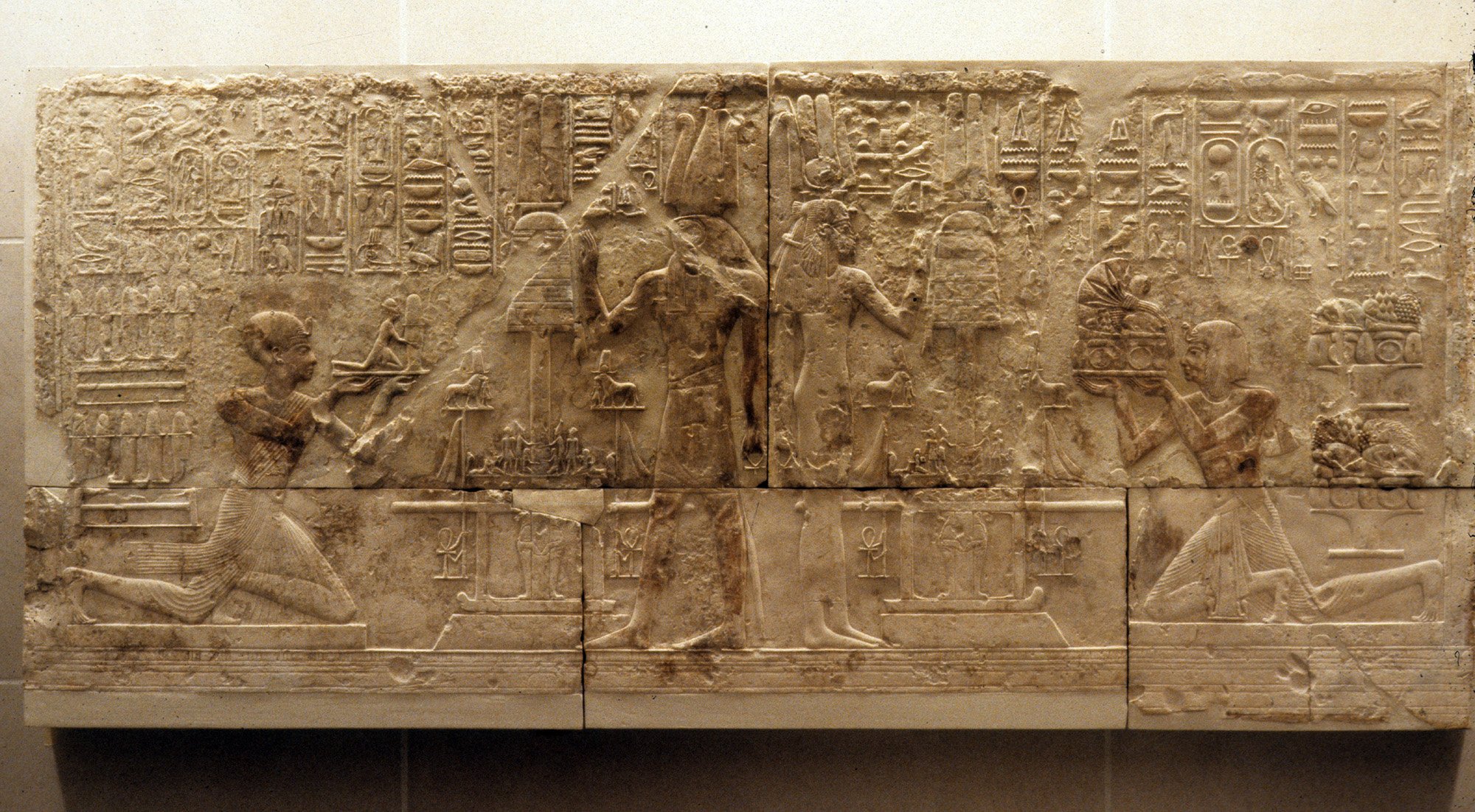
The Seated Scribe, an Egyptian limestone figure from around 2500 BCE, looks back at you with glass eyes that were put into his sockets forty-five hundred years ago. They still work. His pupils track you across the room. Nobody is in front of him.
The Winged Bulls from the palace of Sargon II, at the entrance to the Assyrian wing. Five tons each. Five legs each — four to walk from the side, one extra so that from the front you still see four. An Iron Age king’s joke on the geometry of sculpture. Emptier than the Egyptian rooms.
The sarcophagus of the spouses from Cerveteri, an Etruscan terracotta couple from around 520 BCE, reclining on a couch, smiling at each other like they’re at dinner. Everyone else is at dinner, across from someone, in every century since. You will stand in front of this object for five minutes and forget you are in a museum.
None of these are on the official “must see” list. All of them are closer to what the Louvre is actually good at.
One more warning about the Mona Lisa
You are going to see her anyway. I am not going to stop you. But I am going to tell you how to do it so that you don’t hate it.
Do not go first. Go last. Come at her from the exit side of the Salon Carré. The crowd flows in one direction and if you reverse the current you get the room half-empty behind you. Do not queue for the rail. Stand in the corner by Titian’s Man with a Glove and look at her across the heads, which is how she was meant to be seen anyway, from across a grand room full of other paintings. Spend two minutes. Move on. She is a moderately small oil portrait from around 1503 that got famous because someone stole her in 1911. Once you know the story the crowd becomes the point. You came to see what everyone else came to see, and what everyone else came to see is everyone else.
When you walk out
Leave through the Carrousel. Go up to the gravel of the Tuileries and sit down on one of the green chairs. The best things to see at the Louvre are almost never on the list because the list is a panic response to a building that is too big to hold in one visit. Pick a wing next time. Walk slower. Look at the things nobody else is looking at.