Stand on the Pont Royal at ten in the morning in July. Look left. The Louvre stretches along the Right Bank for six hundred and fifty yards, a building so large that the official tourist brochure admits, in small print, that walking every gallery would cover fifteen kilometers. Look right. Across the Seine, maybe four hundred yards west, sits a single former train station with a thirty-two foot glass clock where the main platform used to be. That is the Musee d’Orsay. A short walk. Two different museums. One trip to Paris. The question of Musee d’Orsay vs Louvre is the first real decision you will make in this city, and almost everyone gets it wrong for the same reason.
Here is the reason. The Louvre has 35,000 works on permanent display spread across roughly 650,000 square feet of gallery. The Musee d’Orsay has around 4,000 works on 200,000 square feet. That is roughly an eight-to-one ratio of art per square foot. Per hour of walking. Per unit of attention. The Orsay is not the Louvre’s smaller cousin. It is a different animal entirely, and the comparison between them is not about which one is “better.” It is about which kind of museum your brain is set up to handle on a Tuesday afternoon after a croissant and two espressos.
This is the guide nobody writes because it insists on the actual answer. Not “both are great.” Not “it depends on your interests.” A real take with a real recommendation at the end.
Two buildings, four hundred yards apart
The Louvre was built as a fortress in 1190, turned into a royal palace in the fourteenth century, got its Grande Galerie under Henri IV, was opened as a public museum on August 10, 1793 during the Revolution, and has been growing ever since. It has wings named after people who helped build it. Denon. Sully. Richelieu. Napoleon looted the collection across Europe in the 1800s. The pyramid in the courtyard went up in 1989. The building itself is older than most countries and the collection spans everything from a three thousand year old Mesopotamian law code to a French painting finished in 1848.
The Orsay is younger. Victor Laloux designed it as the Gare d’Orsay railway terminal for the 1900 Universal Exposition. It was the first electrified train station in the world. Trains stopped running into it in 1939 because the platforms were too short for the new long-distance lines. The building sat half-empty for thirty years. In 1977 Valery Giscard d’Estaing decided it should become a museum covering 1848 to 1914, the exact chronological gap between what the Louvre stops at and what the Pompidou starts from. It opened in December 1986. The conversion took nine years and the vaulted glass roof of the old train platform is still the ceiling of the main sculpture nave.
So the first thing to understand about the Louvre vs Musee d’Orsay question is that the two museums are not in competition. They are designed to be consumed in sequence. The Louvre ends where the Orsay begins. If you love one the way it’s meant to be loved, the other slots in behind it.
Orsay museum size versus Louvre museum size
Let me put the numbers side by side because the scale gap is the first thing the comparison articles all glide past.
Louvre total area: about 72,000 square meters of gallery, or 782,000 square feet. Permanent display: 35,000 works. Roughly 380,000 items in the full collection. Annual visitors before the pandemic: 10.2 million. The record year was 2018. A focused visit covering one wing takes about three hours and leaves most of the building untouched. A full visit is not really possible without multiple days.
Orsay total area: about 57,000 square meters gross, maybe 20,000 square meters of actual gallery, or 215,000 square feet. Permanent display: around 4,000 works. Full collection holdings: about 80,000 items counting the photography and drawings stored off-view. Annual visitors: 3.3 million in the best year. A full visit takes three to four hours and you can see everything worth seeing in five.
Here is the thing. The Louvre has almost nine times as many works on display as the Orsay does. The Orsay has about 28 percent of the Louvre’s gallery floor area. If you divide works per square foot, the Orsay actually feels denser, but each of those works is given more wall. The Louvre crowds its collection. It has to. When your permanent display includes the Venus de Milo, the Winged Victory of Samothrace, three Vermeers, and the largest canvas in the world, you start double-hanging rooms.
The density gap is the whole answer. A visit to the Louvre is a forced march past more art than your visual cortex can process in a single session. A visit to the Orsay is more like a three hour dinner party where you remember every guest. Neither is worse. They are different activities.
Louvre or Orsay first: go Orsay, always
This is the opinion you came here for. Go to the Orsay first. On day one in Paris, if you have to pick one, pick the Orsay. If you have both days, do the Orsay on day one and the Louvre on day two.
The reason is about decision fatigue. The Louvre eats attention. Even a three hour visit will burn you out because the building is built for stamina, not concentration. Walking from the Denon wing to the Richelieu to see Vermeer’s Lacemaker alone is a ten minute trek. The Orsay is a single building with three vertical floors organized chronologically. You can get from Manet on the ground floor to Van Gogh on the fifth in an elevator ride. By the time you walk out, you understand a clean arc: what painting looked like in 1848, what happened to it in the 1860s, how the Impressionists broke it open, and what Cezanne and Van Gogh did next. That is one story, told in three hours, in one building.
Now do the Louvre. Your brain has a spine to hook things onto. Leonardo’s Mona Lisa hangs in the Salle des Etats behind bulletproof glass. She is smaller than you think and she is in the same room as Veronese’s Wedding at Cana, the biggest painting in the Louvre. Walking into the Denon wing after a day at the Orsay, you are asking different questions. You have seen where painting ended up. Now you are looking at where it came from.
If you reverse the order, the Orsay feels like a dessert course you can’t finish. The Louvre has primed you to expect oil on canvas at a certain density and you will walk through three hours of Impressionists wondering when the next room starts. That is the wrong way to meet Manet.
Orsay vs Louvre crowds: this one actually matters
On a July Tuesday the Louvre sells about 30,000 tickets. Most of those visitors want the same three things: the Mona Lisa, the Venus de Milo, the Winged Victory. The Salle des Etats, where the Mona Lisa hangs, has crowd flow rules that look like air traffic control. You will wait in a slow shuffling line to get within fifteen feet of a painting you cannot actually see without a zoom lens on your phone.
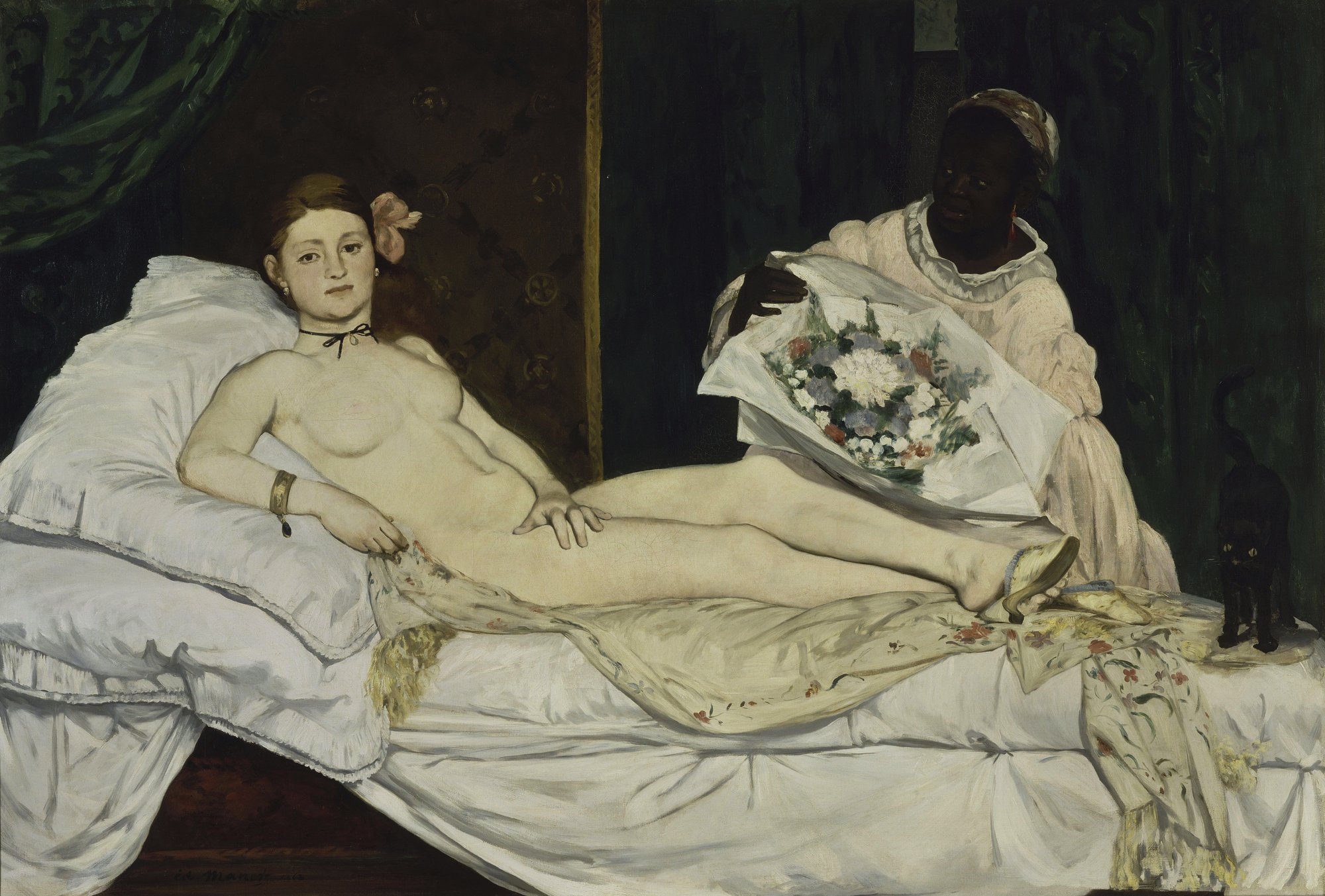
The Orsay on that same Tuesday sells about 10,000 tickets. The Impressionist gallery on the fifth floor gets full but it is never crushed. You can stand in front of Manet’s Olympia for a quiet five minutes, which is enough time to run the 1865 Salon scandal through Chiaro and understand what the umbrellas were for. The fifth floor behind the clock holds maybe two hundred people at peak and the room can absorb it. The Van Gogh room is always busy but not impassable.
If you hate crowds and you have exactly one afternoon, the Orsay is the less stressful visit by a factor of three. This is also why people who have done both usually end up preferring the Orsay in the recall, even when their brain tells them the Louvre was “more important.” Importance is hard to enjoy at twelve thousand people per floor.
Musee d’Orsay vs Louvre by the clock
Rough numbers for planning. Louvre: three hours for a focused tour of one wing. Five hours to cover two wings and the headline works. A full day is a survival test nobody wins. Most visitors who try end up in the cafeteria by hour four, blinking.
Orsay: three hours is the floor. Four is comfortable. Five is a long lunch in the Cafe Campana under the surrealist gold wave and a second pass through the Impressionist gallery. You can do it all in one visit. That is the point. The building is a coherent experience at one sitting.
Combined in a single day: three hours at the Orsay in the morning, ninety minute lunch and walk across the Pont Royal, two and a half hours at the Louvre in the afternoon for the Denon wing and the Italian painting rooms. That gives you the Manets, the Van Goghs, the Monets, the Mona Lisa, the Wedding at Cana, Venus de Milo, and the Winged Victory in one day. Tight but doable. Skip the evening plans.
Is Orsay better than Louvre: the honest answer
No. And also yes.
The Louvre is a bigger, more historically important, more universally celebrated collection. In raw cultural weight the Louvre wins every time. You are looking at three and a half thousand years of visual art across four continents in one building. Nothing on earth is directly comparable.
But “better” is not about weight. If “better” means “the museum you will remember more vividly a month later,” the Orsay wins. If “better” means “the museum where you can actually look at a painting for five minutes without a crowd moving past,” the Orsay wins. If “better” means “the museum whose building is itself part of the art,” it is a tie, because the Louvre’s Grande Galerie is itself a museum object and so is the Orsay’s glass-roofed train nave. If “better” means “I only have one afternoon in Paris,” it is the Orsay.
The reason Reddit threads about Louvre vs Orsay Reddit have the Orsay winning by a small margin is not that the Orsay has better paintings. It is that the Orsay delivers its best paintings at a scale the human visitor is built for. The Louvre asks you to be heroic. The Orsay asks you to be present.
The supporting cast the comparison guides always skip
People comparing the two museums miss that they share a few artists and split a few collections. This is the detail that should change your itinerary.
Manet is at the Orsay, not the Louvre. Monet is at the Orsay. Renoir is at the Orsay. Degas is at the Orsay. Cezanne is at the Orsay. Van Gogh is at the Orsay. Gauguin is at the Orsay. If the painter is French and worked between 1848 and the start of World War One, their best work is across the river. That includes the paintings everyone pictures when they say the word “Impressionism.”
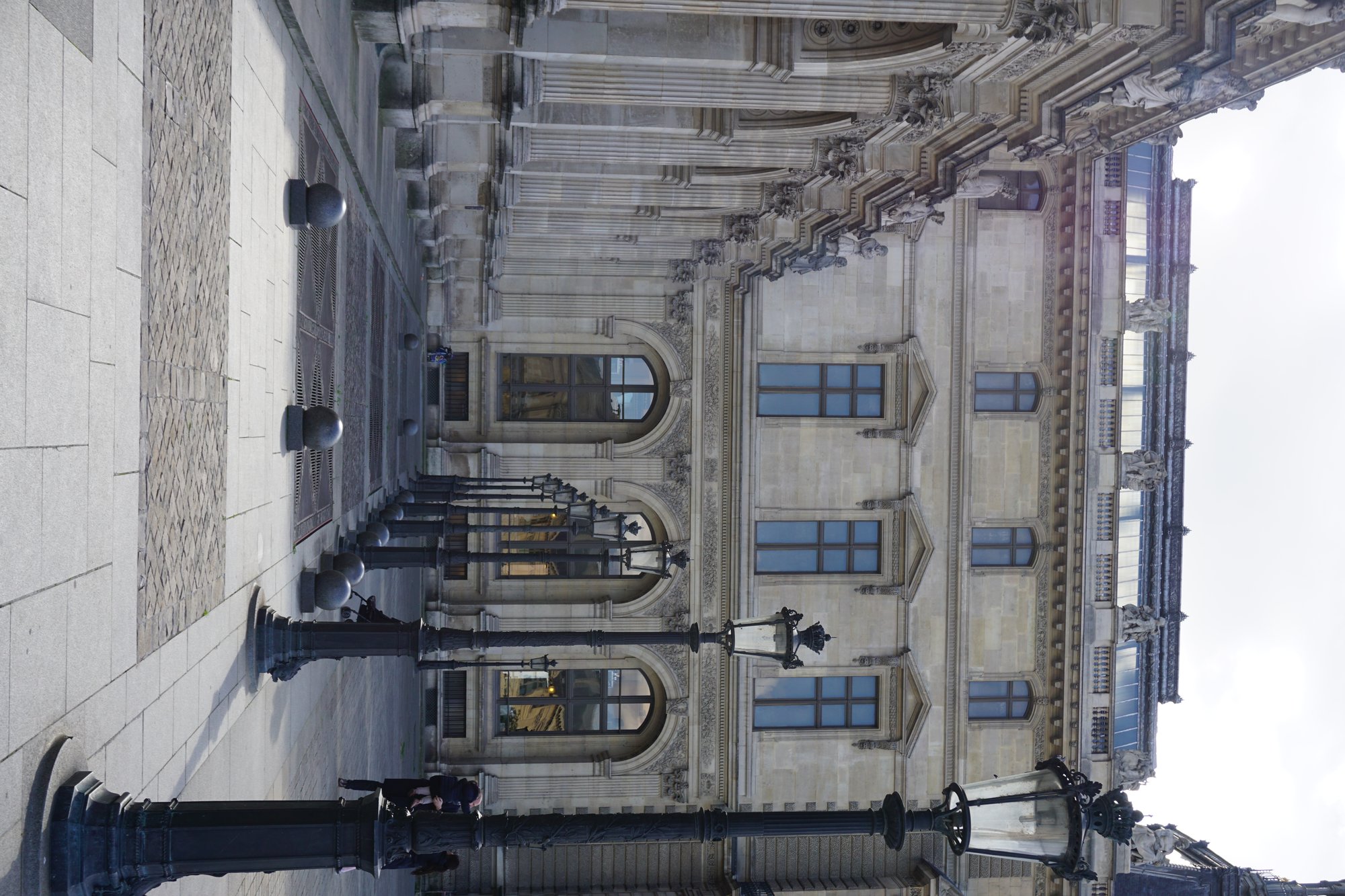
Leonardo is at the Louvre. Caravaggio is at the Louvre. Vermeer is at the Louvre. David is at the Louvre. Gericault and Delacroix are at the Louvre. If the painter worked before 1848, their work is in the Louvre. The cutoff is sharp and it was made on purpose by the Orsay’s founders to end the Louvre’s permanent collection problem of having a thousand paintings nobody walks to.
Sculpture splits differently. The Louvre has Venus de Milo, Winged Victory of Samothrace, Michelangelo’s Dying Slaves, and the Borghese Gladiator. The Orsay has Rodin. If you want to see the Gates of Hell maquette and the small Thinker and Balzac in a robe, you go across the river.
What to actually do, in order
Here is the plan. Two days in Paris. You are picking Louvre or Orsay first and you are picking wrong if you start at the Louvre.
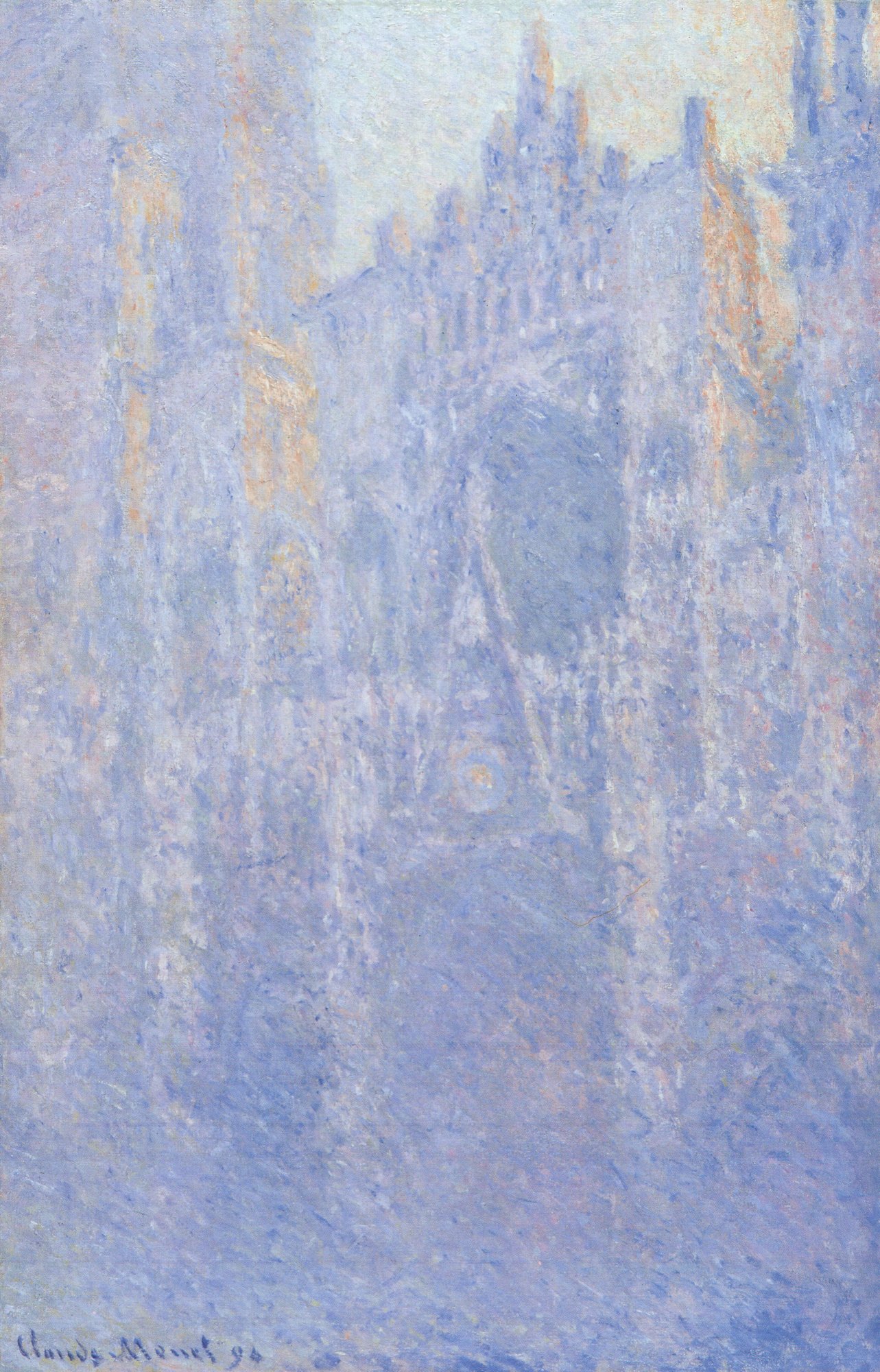
Day one morning: arrive at the Orsay by 9:30. Ride the escalator to the ground floor. Spend forty minutes in the Manet rooms. Walk twenty steps to Courbet. Ride up to the middle level for twenty minutes of Rodin. Take the second escalator to the fifth floor for seventy minutes of Monet, Renoir, Cezanne, Van Gogh, and the view through the great clock. Three hours. Out the door by 12:30.
Day one afternoon: lunch along the Seine. Cross the Pont Royal. Enter the Louvre through the Porte des Lions (smaller crowd than the pyramid). Two and a half hours in the Denon wing: Italian painting room, Salle des Etats for the Mona Lisa and the Wedding at Cana, the Grand Gallery, out past the Venus de Milo.
Day two morning: if you have one, go back to the Louvre for three hours in the Richelieu wing. French painting, the Vermeers, the Mesopotamian antiquities. If you only have one day, skip this and go back to the Orsay for a second hour on the fifth floor.
The Orsay is the shorter, sharper, more rewarding visit. The Louvre is the bigger, heavier, more historically complete visit. In a straight head-to-head, the right move is not to pick. It is to do the Orsay first so the Louvre lands properly.
The kicker
A month after you get home from Paris, you will remember the Orsay in sentences. You will remember the Louvre in flashes. That is what the eight-to-one density gap actually does to a brain under museum conditions. The Louvre makes you a tourist. The Orsay makes you a visitor.
Two museums. Four hundred yards apart. One right order. Orsay first.
Image credits
- Denon Wing, Louvre 9 October 2017 001.jpg — Huỳnh Phạm So Ny’s Album. Source, CC BY-SA.
